← All work

Household money, once a month

A net-worth tracker for a household: twenty balances logged once a month as a checklist, trends over years, and a one-page report written for someone who isn't a numbers person.

Status
In daily use · LAN only
Runs
Pocket Change
Started
Jun 2026 · rebuilt Oct
Stack
FastAPISQLCipherReact 19TypeScriptTanStack QueryCaddyDocker
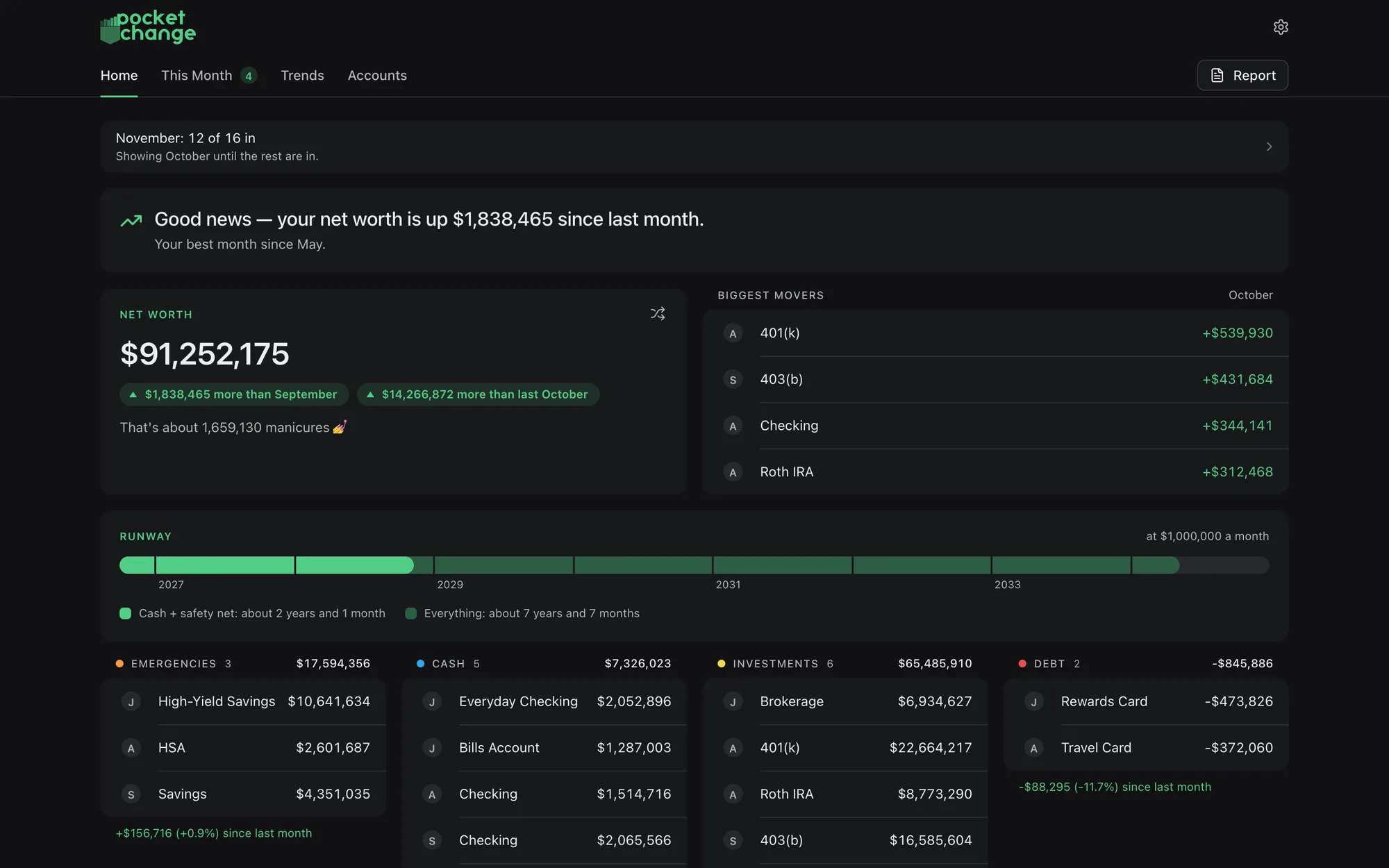
Pocket Change: main view
4 daysAudit to all steps shipped
283Automated tests
12Bugs found by the audit
71Brand design rounds

The Problem

Once a month I log into every bank and copy each balance by hand, and some arrive later by text. The old app made that a 20-column grid with no memory of last month, and its report was a screenshot of the dashboard. The audit set two jobs: make the monthly log quick, and make the report easy to read on a phone.

How It Works

The workflow, step by step.

  1. 01

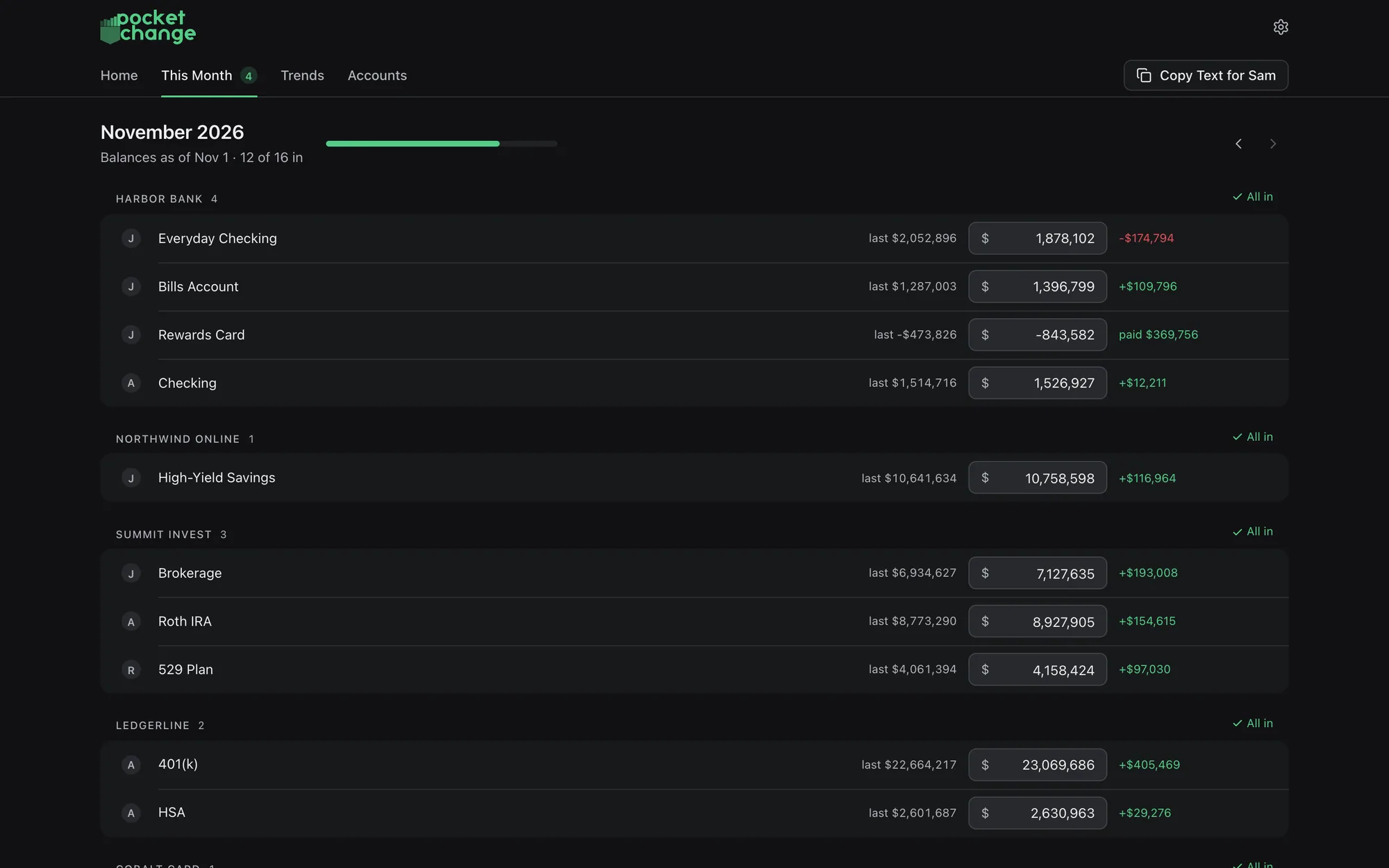
    Log the month as a checklist

    Grouped by where you log in, with last month beside each field and the change as you type. A balance that moves three times its usual swing asks if it's right. Each value saves on its own, so a half-done month is safe.

    Log the month as a checklist
  2. 02

    Read the month at a glance

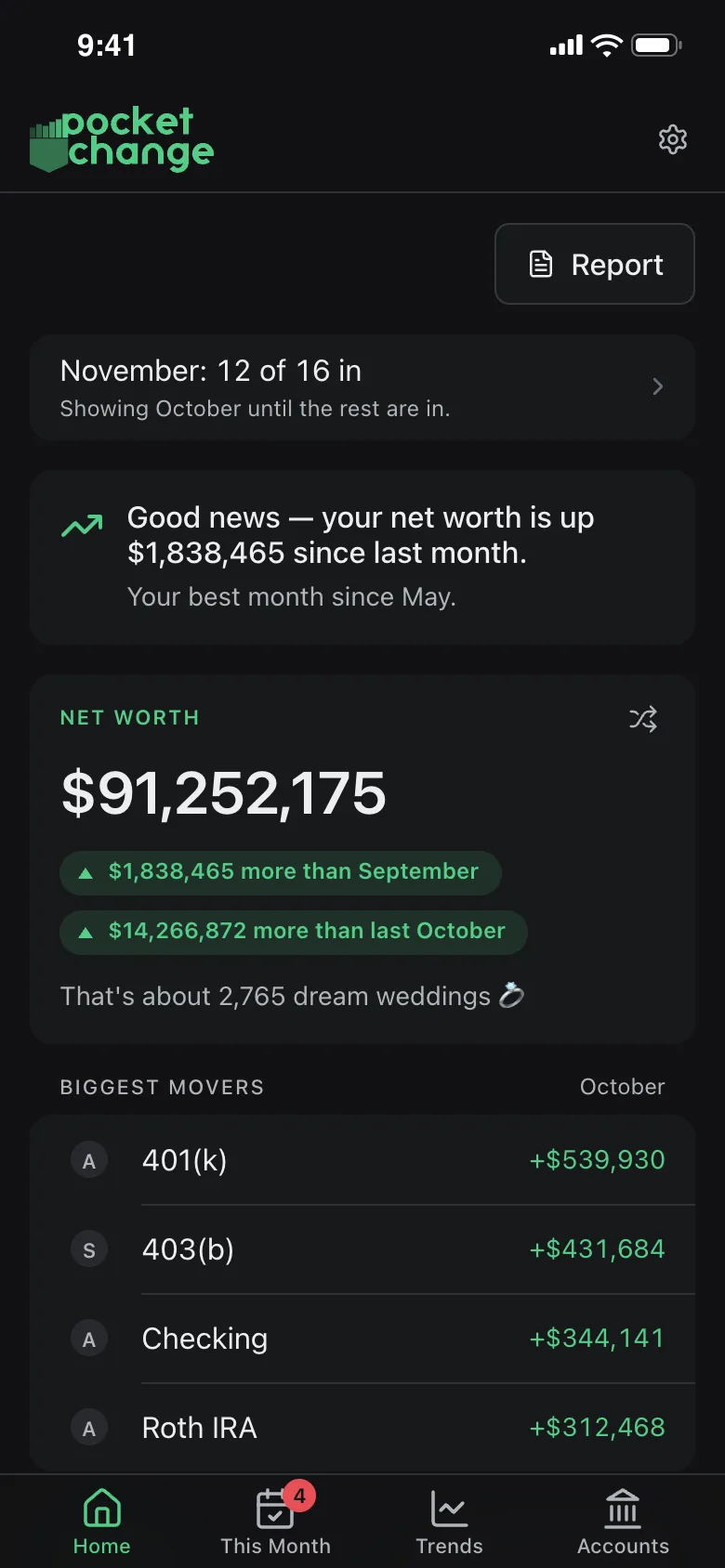
    Home shows net worth against last month and last year, the biggest movers, and runway two ways: the worst case counting everything, and only the money you could actually use.

    Read the month at a glance
  3. 03

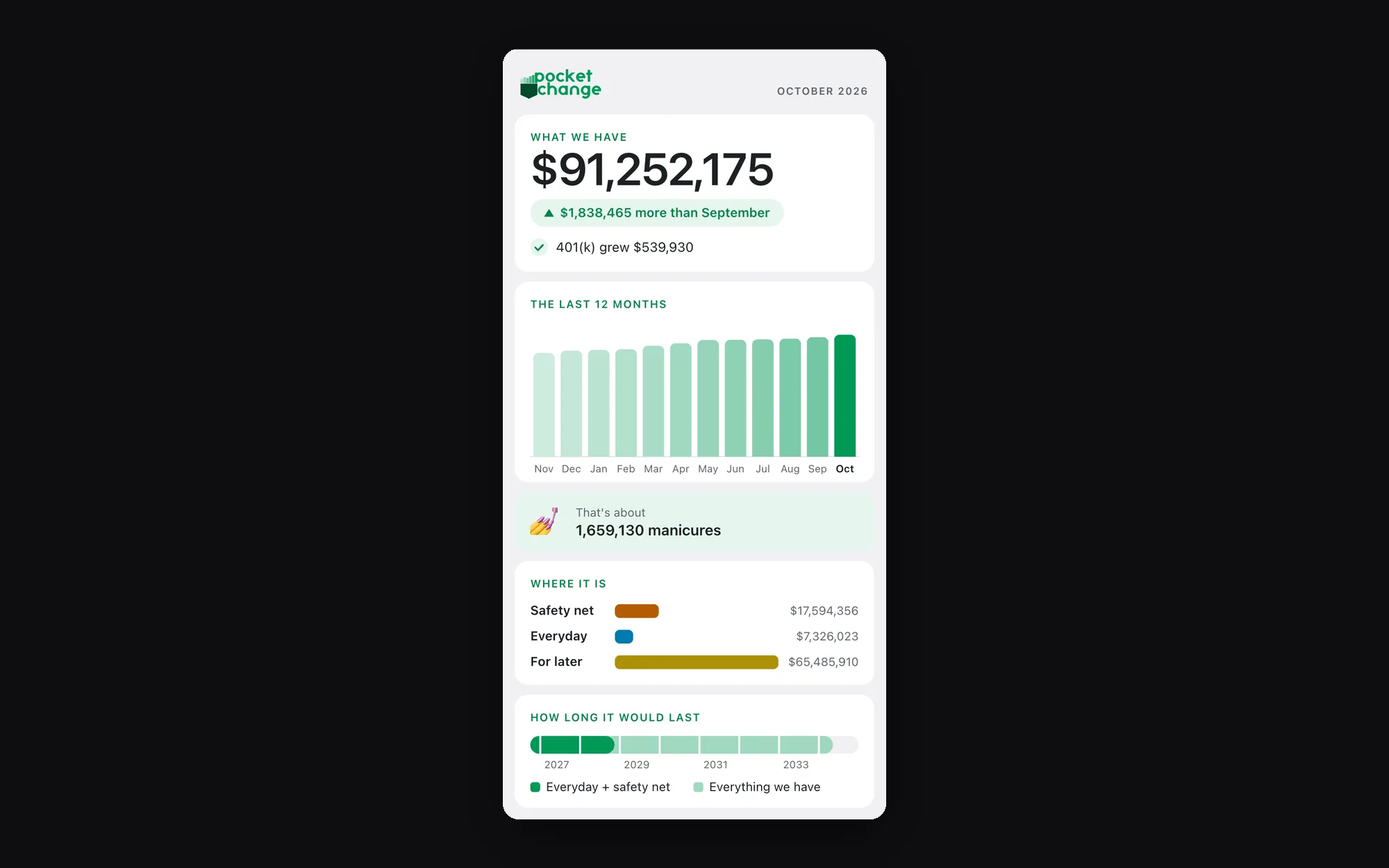
    Send a report anyone can read

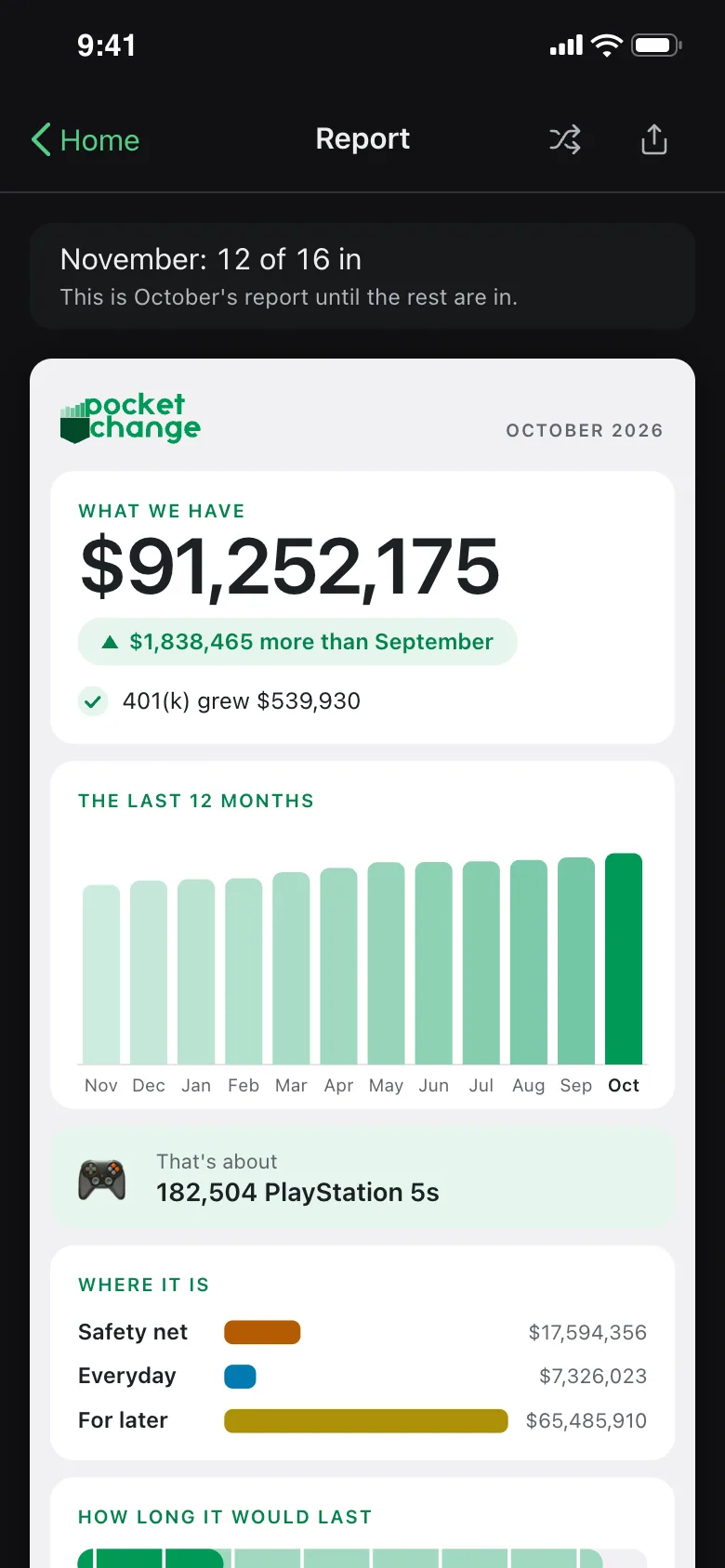
    One page, always on light paper: what we have, the last twelve months as bars, where it is and how long it would last. A down month is said plainly in red, never with warning words. The screen and the PDF are drawn from one scene.

    Send a report anyone can read
  4. 04

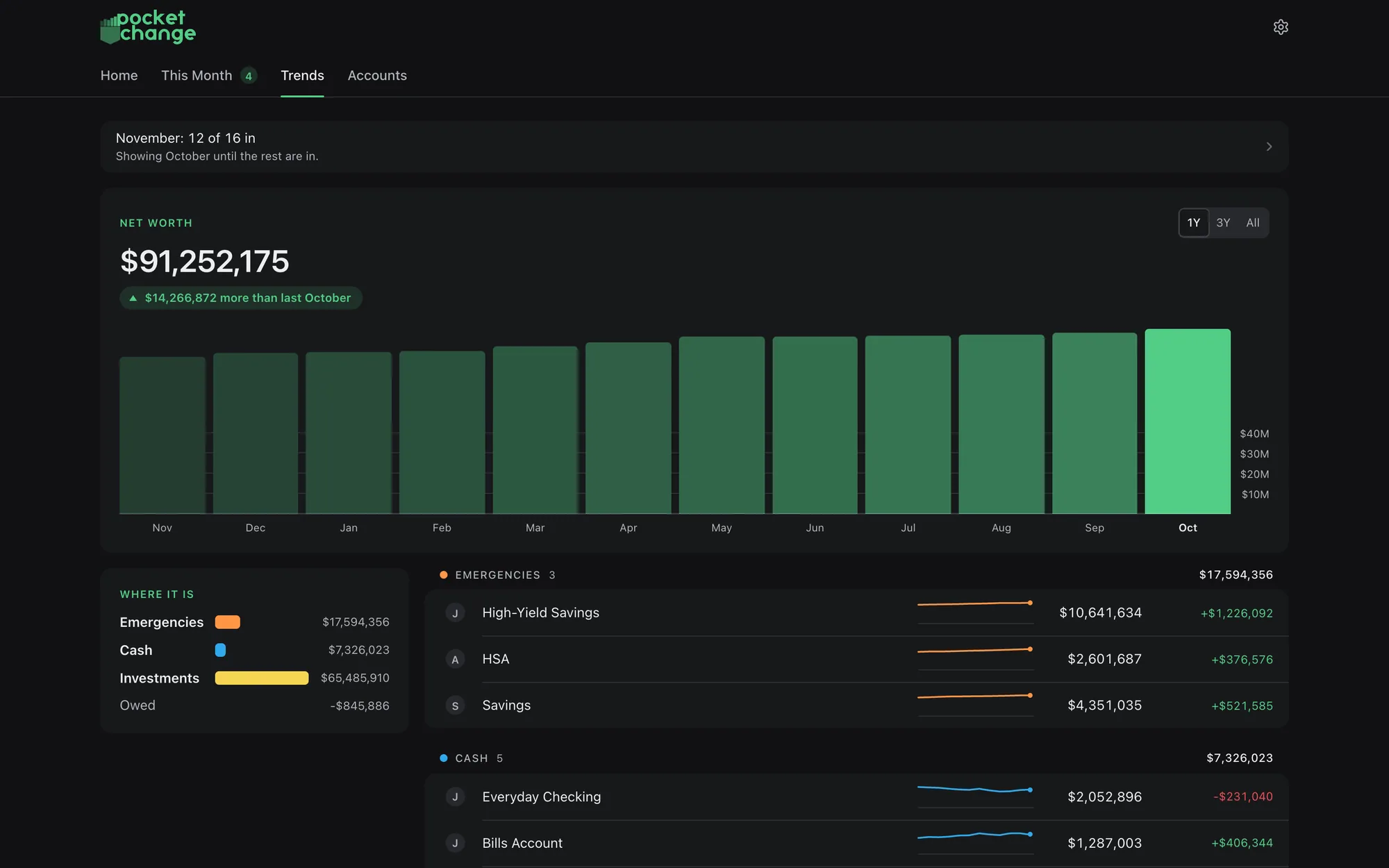
    See years, not noise

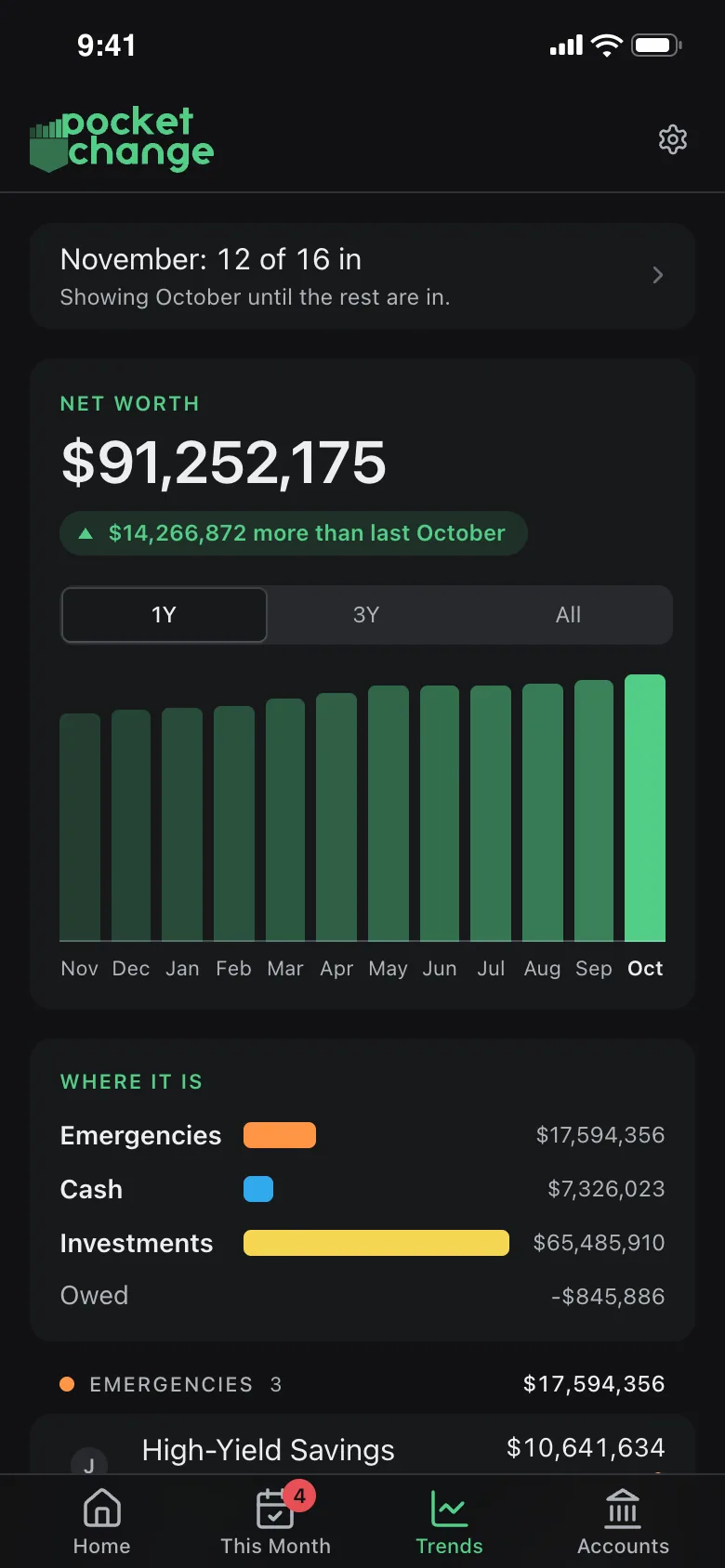
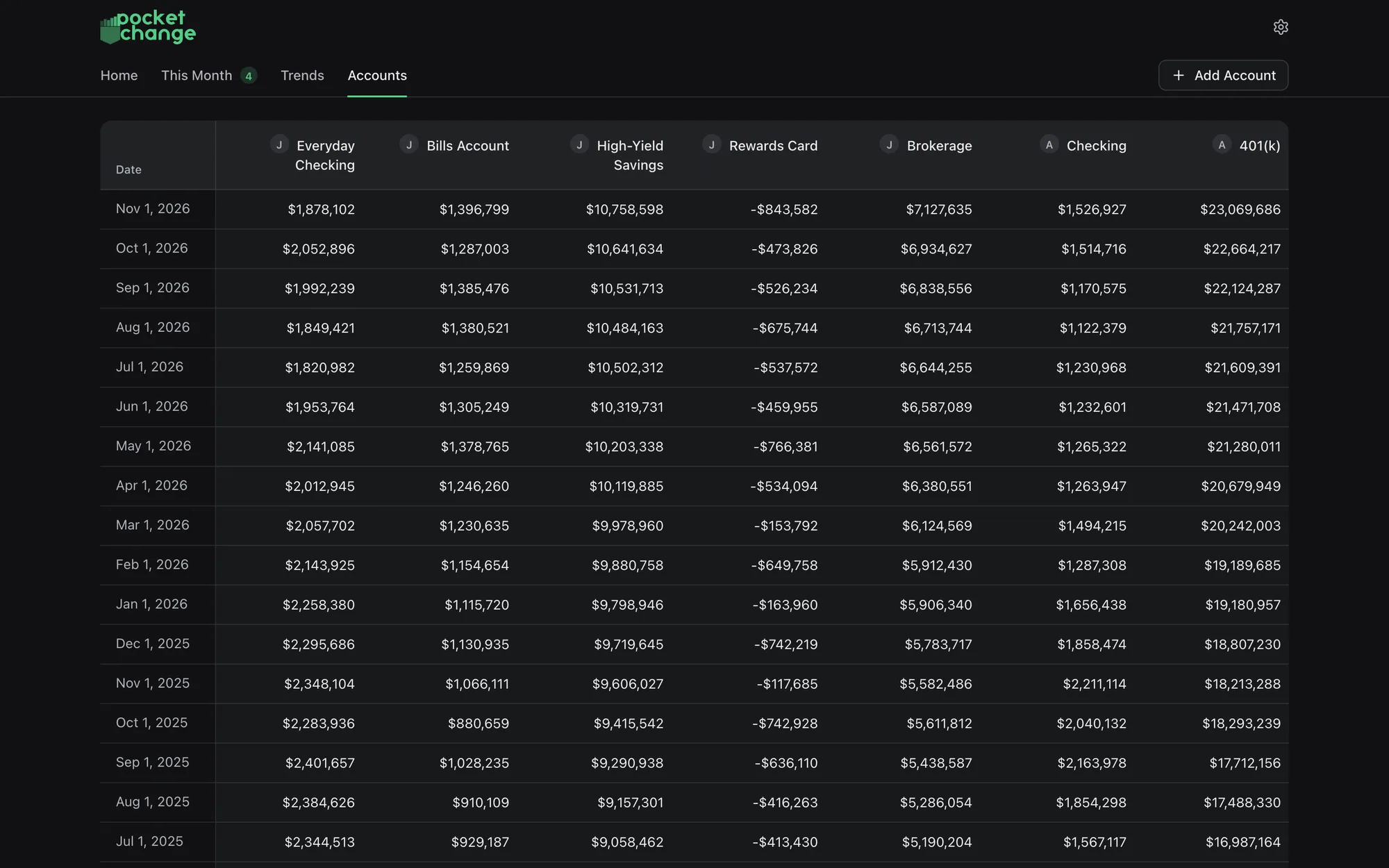
    One chart over 1, 3 or all years, bars from $0 so a small dip never looks like a crash, then every account as a row with its own small trend.

    See years, not noise

On The Phone

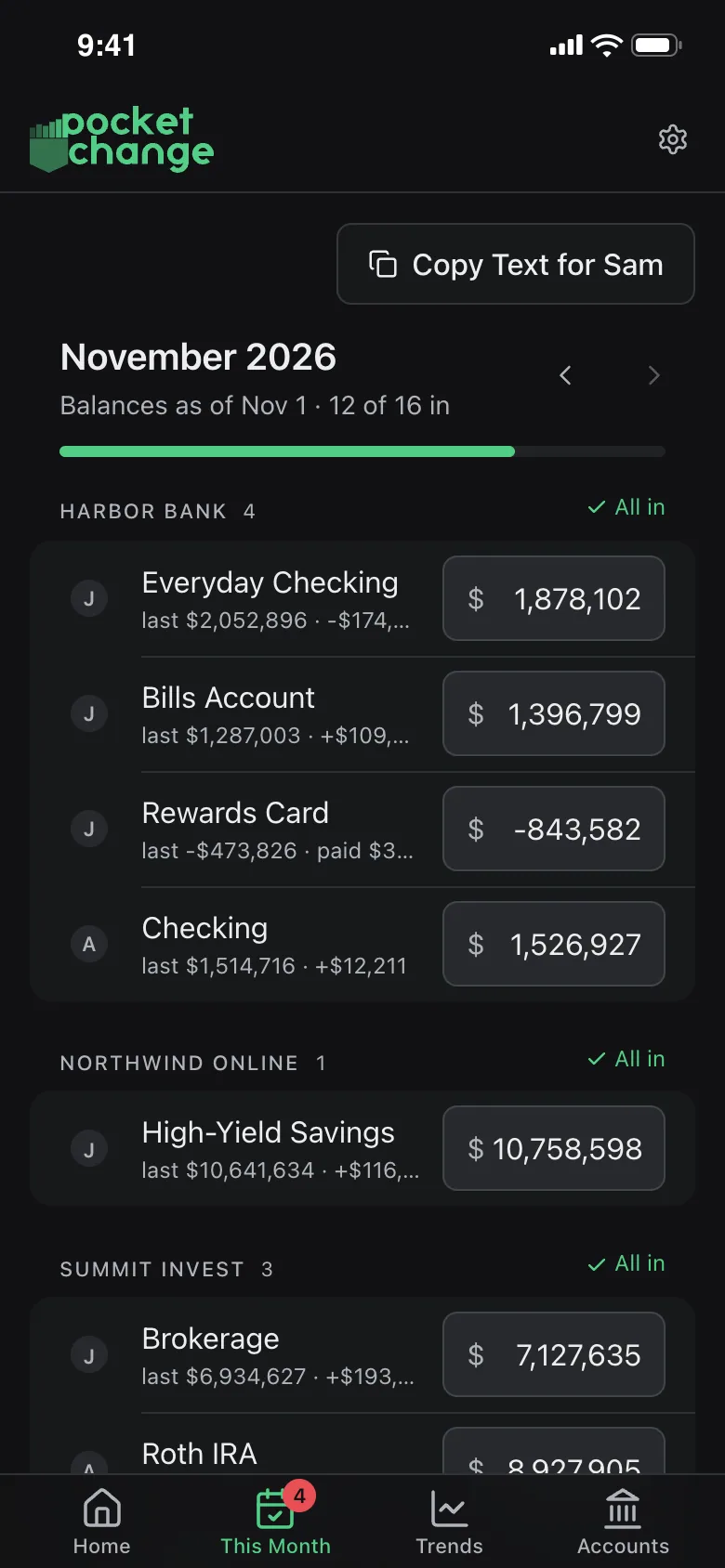
A real phone layout, not a shrunk desktop.

This Month: a checklist, grouped by where you log in
Home: net worth and what moved
Trends: one chart, then every account
The report, always on light paper

The Details

Where the rigor shows.

01

Encrypted at rest, LAN only

The database is SQLCipher-encrypted, with the key on the server's boot drive and never in the repo. It has no public hostname on purpose: TLS and a login at the door, reachable only at home. A deliberate departure from the family standard, written down.

02

Backups that are proven

Encrypted copies every night on the server, pulled daily to the Mac, and a restore actually run and checked, not assumed.

03

Migrations proven on a copy

Schema changes are additive, guarded so they can run twice, and checked with a script that compares net worth month by month before and after, on a copy of the real data, before merge.

04

An audit before a redesign

Round one measured the real data read-only (37 months, 20 accounts) and found 12 bugs, among them a mortgage that would print as "$-95,681" and a debt change shown as -65%. Each fix got a test that failed on the old code first.

05

No chart library

Plotly left in the rebuild. The charts are the app's own small parts (bars, sparklines, bar rows), built from the same tokens as everything else.

06

Color means one thing

Color marks a bucket (cash, investments, emergency, debt) and nothing else. Owners are a gray letter. The audit cut hard-coded style values from 103 to 16.

Architecture

How the pieces fit.

  1. Bank sites
  2. This Month checklist
  3. FastAPI
  4. SQLCipher
  5. React app
  6. One-page report

One container on my home server, LAN only: Caddy terminates TLS and a login, and the database is encrypted at rest. Every screen here was captured from an invented household (made-up accounts, owners and balances), never the real data.

How AI Built It

The process behind the product.

  1. Jobs first, then screens

    The audit asked what I actually do, and how often, before proposing anything. Six calls went on a decision page; the plan followed my answers, including one note: keep runway counting everything, and show the other number beside it.

  2. Foundations before screens

    Tokens, shared parts and the phone frame were built first, so the two screen sessions that followed in parallel (the monthly log and the report) couldn't each invent their own.

  3. Seven steps in four days

    Safety fixes, backups, the data model, foundations, This Month, the report and Trends, each its own session with a written prompt, shipped Oct 4–7.

  4. Seventy-one brand rounds

    A pocket with a rising bar chart, round by round, until the mark worked as an app icon, a header and a favicon.

In Motion

On the phone: the month at a glance, This Month, Trends (an invented household)

More Screens